
Table setting with purpose: think like a service professional
A practical exercise in accuracy, consistency and guest comfort for future food and beverage professionals.
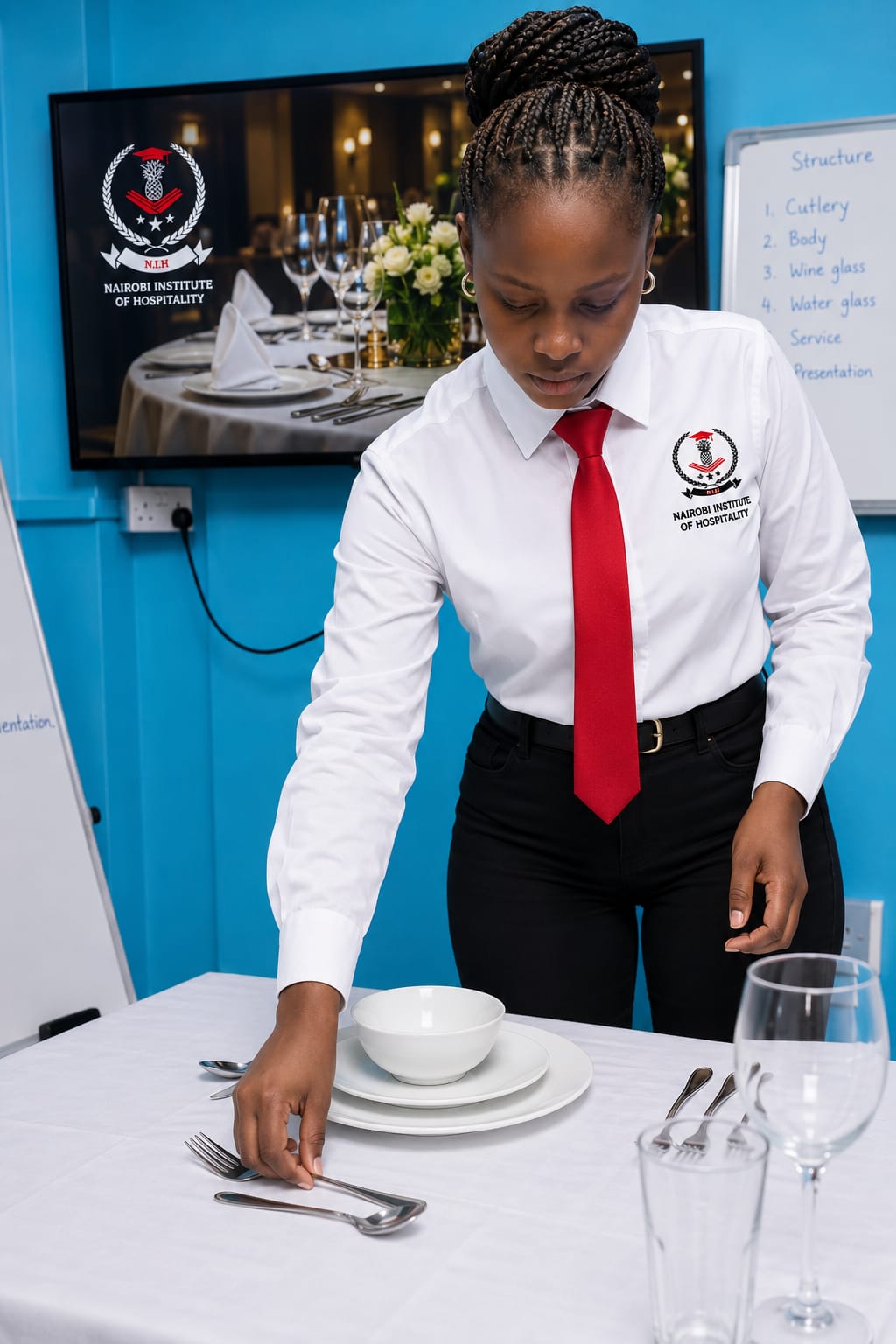
A table setting is more than an arrangement of plates, cutlery and glasses. It prepares the guest for the experience ahead and shows how carefully a service team has considered the details. At Nairobi Institute of Hospitality, we encourage prospective hospitality learners to look beyond appearance and ask a practical question: how does this setting support comfortable, organised service?
Begin with the meal and the service standard. Different menus, venues and occasions require different arrangements, so avoid assuming that one layout suits every situation. Ask your instructor or supervisor which items are needed and how they should be positioned. Understanding the reason behind a setting helps you make better decisions than simply copying a photograph.
Check each item before placing it. Look for clean surfaces, intact glassware and presentable linen. Follow the hygiene procedures you have been taught, handle items appropriately and keep the work area organised. If something is damaged or unsuitable, set it aside through the correct process and ask for guidance. Preparation is an opportunity to notice problems before a guest arrives.
Then consider the guest's perspective. Is there enough space to sit comfortably? Are items easy to reach? Does the arrangement match the planned service? Consistent spacing can make a setting look composed, but practical use matters too. Avoid adding items merely to fill a space. A clear, purposeful arrangement is easier to explain and maintain.
Try a simple learning exercise with a partner. Using clean, suitable items, prepare one place setting for a sample menu. Describe what each item is for and explain your arrangement. Ask your partner to review it against the agreed standard, then swap roles. Record one detail you handled well and one you would improve. Repeat the exercise with attention to accuracy before trying to work faster.
This practice also develops teamwork. In a service environment, colleagues need to understand the same standards and communicate when something changes. A short check before service can help the team identify missing items and clarify responsibilities. Ask questions respectfully, accept feedback and aim for a reliable process rather than a perfect-looking first attempt.
If this kind of detail interests you, explore our Food & Beverage Service programme. Ask our admissions team about the current course outline, duration, fees, entry requirements and practical learning arrangements. Tell us what you would like to develop, whether that is service etiquette, confidence or a clearer understanding of hospitality work.
Take your next step with NIH College. Call or WhatsApp +254 797 410 292, email nairobiinstituteofhospitality@gmail.com, or visit Information House, Suite 403, Mfangano Street, Nairobi CBD. Bring your questions so we can help you make an informed study decision.